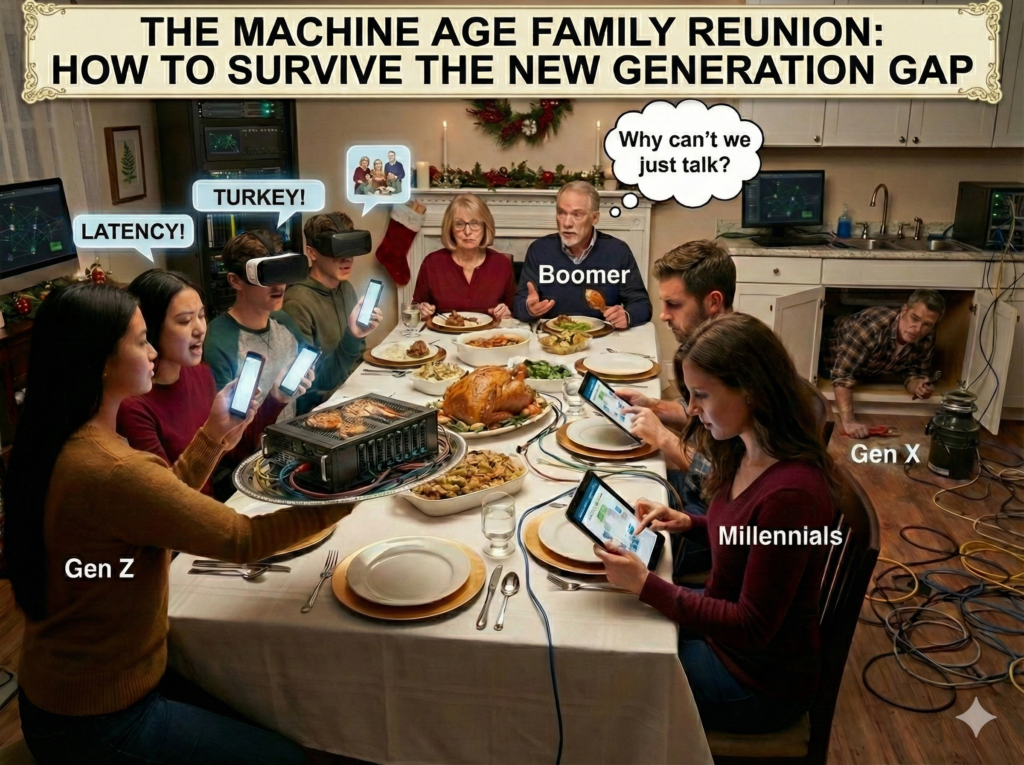
Managing a modern IT infrastructure in 2026 is exactly like hosting a chaotic Thanksgiving dinner.
You have the Gen Z kids screaming at the “latency” of the turkey and refusing to eat it because the brand feels inauthentic.
You have the Millennials frantically trying to “optimize” the seating chart with a new app they just downloaded, convinced they can shave 12 minutes off the serving time.
You have the Gen Xers quietly crawling under the sink with a wrench because the garbage disposal broke an hour ago and nobody else noticed.
And you have the Boomers sitting at the head of the table, asking why we can’t just put down the phones and actually talk to each other.
We used to talk about the “Digital Divide.” That term referred to access—who had the internet and who didn’t. That divide is largely closed.
Now we are facing something much deeper and much harder to solve: What is reality? Generationally speaking, we don’t agree on what reality is. We don’t agree on the fundamental nature of the tools we use.
The Breakdown: A Field Guide for the Perplexed CTO
Over the last few weeks, I’ve been digging deep into the research on how these different generations interact with the systems and products I build. I wanted to understand why a user interface that delights a 25-year-old developer infuriates a 65-year-old CFO.
Here is the Cheat Sheet:
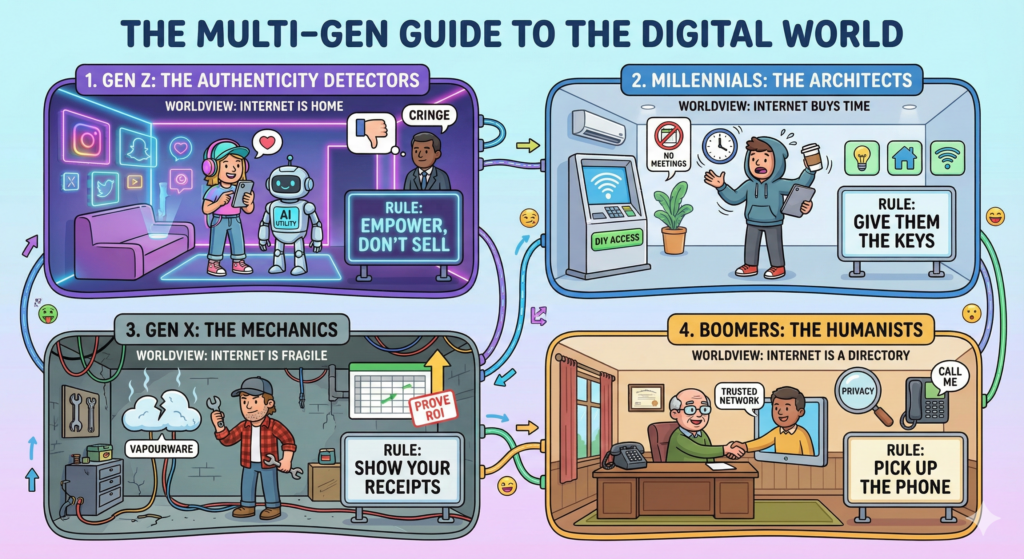
Gen Z: The Authenticity Detectors
- The Worldview: The internet isn’t a place they visit; it’s the place they live.
- The friction: They hate “Cringe.” They hate performative corporate behaviour. They treat AI as a companion and a utility.
- The Rule: If you try to “sell” them, you lose. If you empower them, they will build your product for you.
- Detailed Article: The “Authenticity Filter” Generation: Why Gen Z Doesn’t Want Your Sales Call
Millennials: The Architects
- The Worldview: The internet is a tool to buy back time. They are obsessed with efficiency because they are squeezed by economic pressure and burnout.
- The Friction: They hate phone calls. They hate meetings. They hate opaque pricing.
- The Rule: Give them the keys. Self-service is the only service they respect.
- Detailed Article: We Killed the Napkin Deal: Why Millennials Want APIs, Not Appetizers
Gen X: The Mechanics
- The Worldview: The internet is a useful but fragile machine. They are skeptical of hype because they have seen every bubble burst since 1999.
- The Friction: They hate “Vapourware” and buzzwords. They want to know what happens when the power goes out.
- The Rule: Show your receipts. Prove the ROI. Be reliable, not flashy.
- Detailed Article: Latchkey Logistics: Why Gen X Just Wants It to Work
Boomers: The Humanists
- The Worldview: The internet is a directory. The real value is still in human connection and trusted networks.
- The Friction: They hate becoming a number. They fear the loss of privacy and agency.
- The Rule: Pick up the phone. The “Human Handshake” is the ultimate premium feature.
- Detailed Article: The Handshake Protocol: Why Boomers Are the Last Line of Human Defense
The “Rep-Free” Future vs. The “Human Premium”
This creates a massive strategic conflict for anyone building B2B services. We are heading toward a weird bifurcation in the market.
For Gen Z and Millennials, the “Perfect Customer Experience” is a Silent Fortress. They want to enter the portal, execute the command, provision the server, and log off without ever speaking to a soul. To them, silence is golden. Silence means the system works.
For Boomers (and increasingly, high-net-worth clients who want concierge service), the “Perfect Experience” is High-Touch. They want to know the name of their account manager. They want a quarterly review call. To them, silence means neglect.
So, how do you build a single company that serves both?
The Hybrid Model: The Fortress with a Doorbell
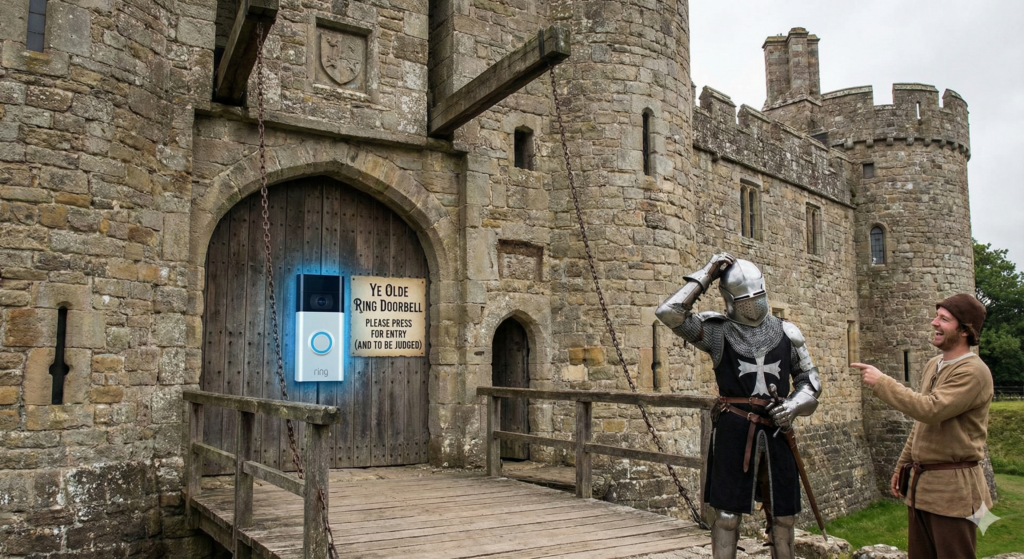
The answer isn’t to choose one side. It’s to build what I call the Silent Fortress with a Doorbell.
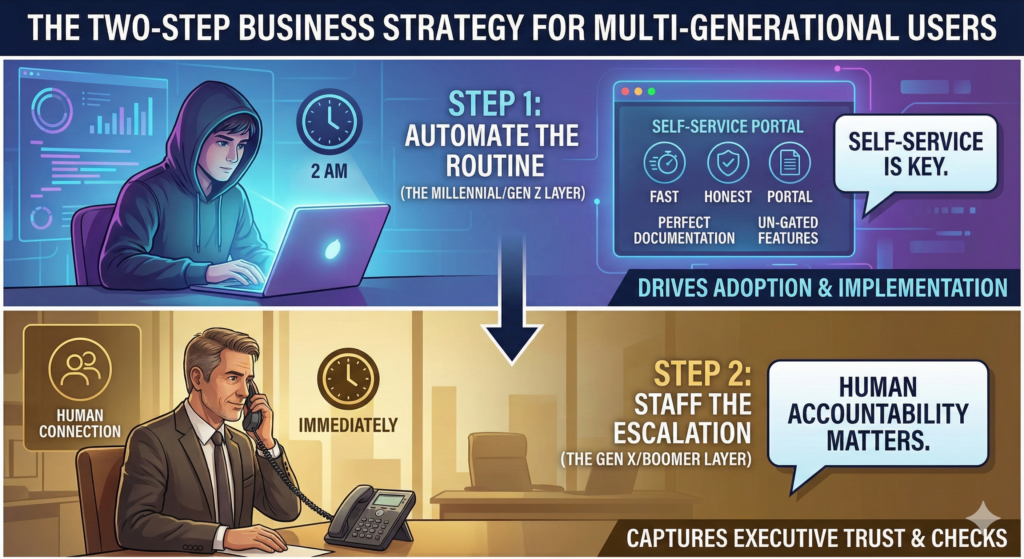
Step 1: Automate the Routine (The Millennial/Gen Z Layer)
Build the self-service portal. Make it fast. Make it honest. Make sure the documentation is perfect. Allow the “Makers” to do their work at 2 AM without permission. Do not gate basic features behind a sales wall. This captures the user base that drives adoption and technical implementation.
Step 2: Staff the Escalation (The Gen X/Boomer Layer)
When the button doesn’t work, or when the problem is too complex for an FAQ, ensure a human being picks up the phone. Immediately. Not a chatbot. Not a decision tree. A human.
This captures the executive layer—the people writing the checks, who value accountability above efficiency.
The Maker’s Mindset
I look at this challenges through the lens of my background in robotics. A robot is only as good as its sensors. If a robot has a great motor but cannot “see” the wall, it crashes. When the first Roomba’s came out, they were like magic, even though they cleaned the house via brute force (assuming after X hours randomly crashing = cleaned). Now a smart vacuum spits out a laser scanned 3D image of your entire house on its first pass and plans its route explicitly.
Our “sensors” today are our ability to empathize with these different users. We have to stop designing for the “Average User.” The Average User doesn’t exist. There is only the specific user in front of you right now.
If you treat a Boomer like a Gen Z (forcing them into a chatbot), you fail.
If you treat a Gen Z like a Boomer (forcing them onto a discovery call), you fail.
The technology isn’t the differentiator anymore. We all have access to the same cloud, the same AI models, the same fiber optics. The differentiator is Empathy.
And yes, I know that sounds soft coming from a millennial systems engineer who likes to solder circuit boards in his workshop. But if I can manage four daughters and a global communications product, I can tell you one thing for sure: Listening is the only protocol that never goes obsolete.